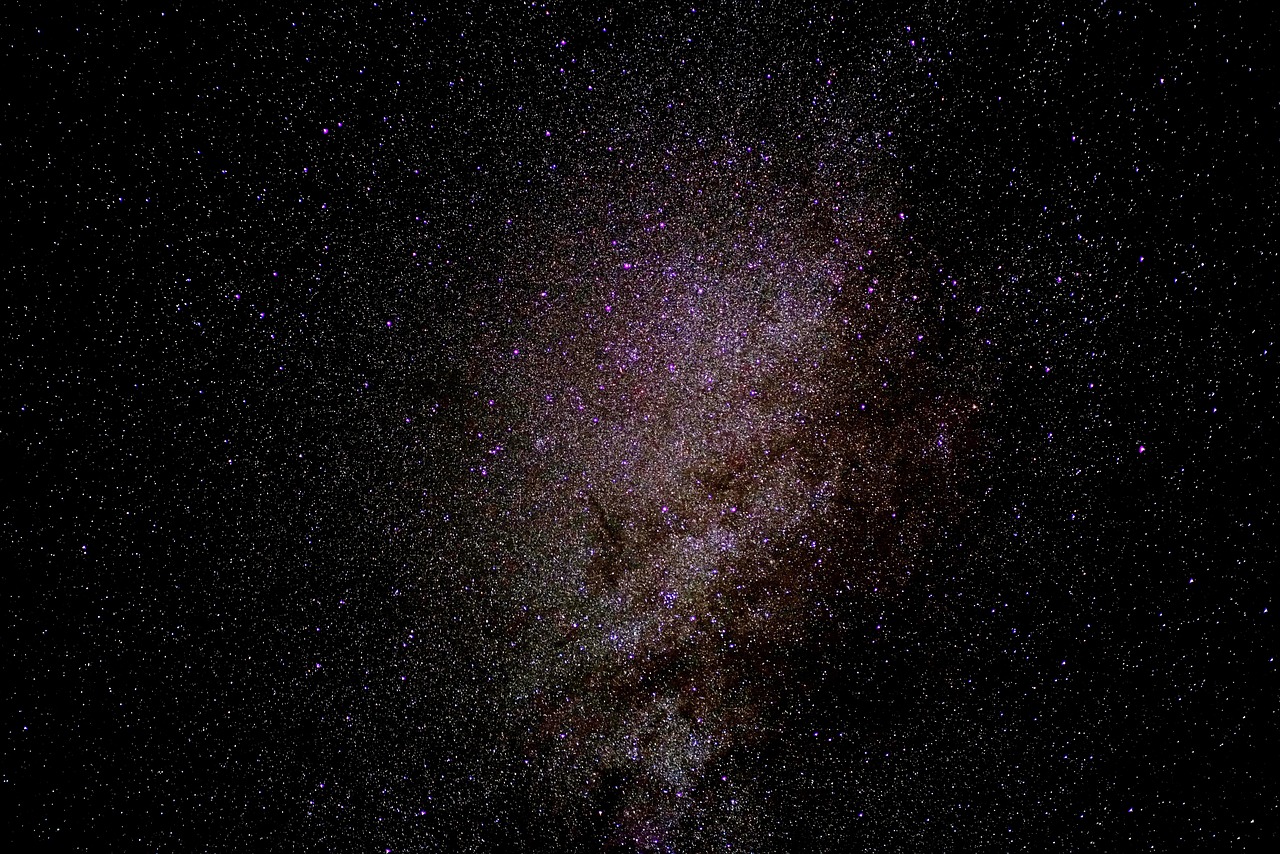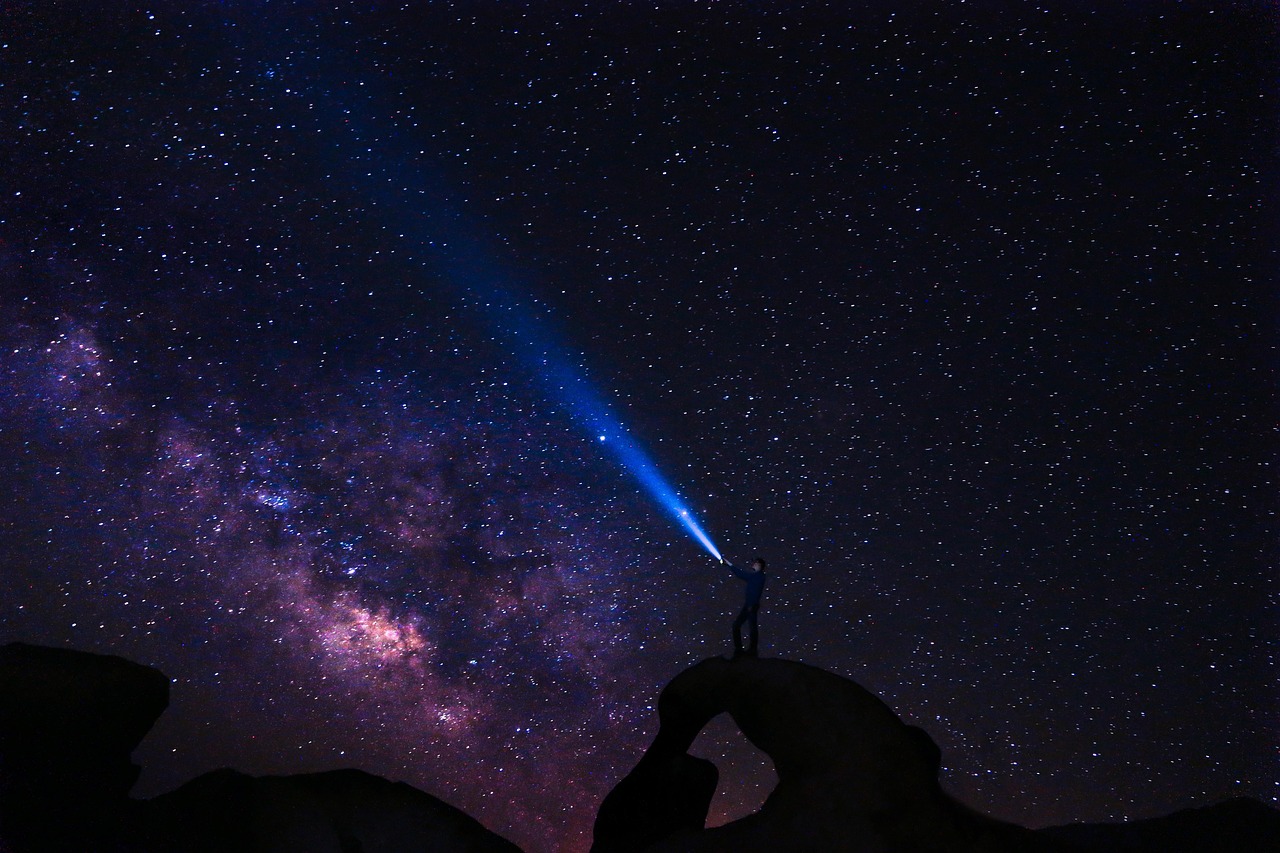
The night sky holds infinite wonders waiting to be discovered, and deep-sky astronomy opens doors to galaxies, nebulae, and star clusters beyond imagination.

Starting your journey into deep-sky observation requires careful consideration of equipment choices. Unlike casual stargazing, exploring distant celestial objects demands specialized gear that balances performance, portability, and budget. This comprehensive guide will walk you through every essential component needed to begin your cosmic adventure, ensuring your first telescope purchase becomes a gateway to years of astronomical exploration rather than a disappointing experience gathering dust in the garage.
🔭 Understanding Deep-Sky Astronomy: What Makes It Different
Deep-sky astronomy focuses on observing celestial objects beyond our solar system. While planetary observation reveals Jupiter’s bands and Saturn’s rings with relative ease, deep-sky targets present unique challenges that shape your equipment needs.
These distant objects—including galaxies like Andromeda, emission nebulae such as the Orion Nebula, and globular clusters like M13—require telescopes that gather substantial light. They appear faint and extended rather than bright and defined, demanding different optical characteristics than planetary scopes.
The key difference lies in aperture requirements and optical design. Deep-sky observation prioritizes light-gathering ability over magnification, making larger apertures essential for revealing faint structures. Understanding this fundamental distinction prevents beginners from purchasing equipment optimized for the wrong observing goals.
Telescope Types: Finding Your Perfect Match
Three main telescope designs dominate amateur astronomy, each offering distinct advantages for deep-sky observation. Your choice significantly impacts what you’ll see and how portable your setup remains.
Refractor Telescopes: Crisp Views with Convenience
Refractor telescopes use lenses to gather and focus light, offering sharp, high-contrast images with minimal maintenance. These sealed tubes protect optics from dust and require no collimation adjustments, making them beginner-friendly options.
For deep-sky work, apochromatic refractors eliminate chromatic aberration, delivering stunning views of nebulae and star clusters. However, aperture-for-aperture, refractors cost significantly more than reflectors. A quality 80-100mm apochromatic refractor serves well for wide-field deep-sky viewing but limits your reach to brighter targets.
Budget-conscious beginners might consider achromatic refractors, though chromatic aberration becomes noticeable on bright objects. These work acceptably for deep-sky observation where color fringing matters less than on high-contrast planetary targets.
Reflector Telescopes: Maximum Aperture for Your Budget
Newtonian reflectors represent the most cost-effective path to large aperture, essential for deep-sky astronomy. These telescopes use mirrors instead of lenses, delivering substantial light-gathering power at reasonable prices.
A 6-inch (150mm) reflector reveals hundreds of deep-sky objects, while 8-inch (200mm) and 10-inch (250mm) models open up thousands of galaxies, nebulae, and clusters. The trade-off comes in maintenance requirements—reflectors need periodic collimation to maintain optimal performance.
Dobsonian telescopes, a reflector variant on a simple alt-azimuth mount, provide exceptional value for visual deep-sky observers. These “light buckets” maximize aperture while minimizing cost, though they lack computerized tracking and aren’t ideal for astrophotography.
Compound Telescopes: Portable Powerhouses
Schmidt-Cassegrain (SCT) and Maksutov-Cassegrain telescopes fold light paths using mirrors and corrector plates, creating compact instruments with long focal lengths. This portability makes them popular among observers with limited storage or who travel to dark sites.
These versatile scopes perform well for both planetary and deep-sky observation, though they cost more per inch of aperture than reflectors. An 8-inch SCT provides serious deep-sky capability in a manageable package, especially when paired with quality mounts enabling astrophotography.
⭐ Aperture: The Most Critical Specification
Aperture—the diameter of your telescope’s primary lens or mirror—determines how much light your instrument gathers. This single specification matters more than any other for deep-sky astronomy success.
Doubling aperture doesn’t double light-gathering ability; it quadruples it. A 6-inch telescope collects four times more light than a 3-inch scope, revealing dramatically more detail in faint nebulae and distant galaxies. This exponential relationship makes every additional inch of aperture valuable.
Beginners should target minimum apertures of 4-6 inches for meaningful deep-sky observation. Smaller telescopes show bright targets like the Orion Nebula and Andromeda Galaxy but struggle with fainter objects. The 8-inch aperture threshold represents a sweet spot where thousands of deep-sky targets become accessible without excessive cost or bulk.
Light pollution in your observing location influences aperture needs. Urban observers benefit more from moderate apertures paired with light pollution filters, while rural observers under dark skies maximize returns from larger apertures revealing subtle nebulosity and faint galaxies.
Mount Selection: The Foundation of Stable Viewing
Even the finest telescope delivers disappointing views when paired with an inadequate mount. Stability matters tremendously at the magnifications required for detailed deep-sky observation.
Alt-Azimuth Mounts: Simple and Intuitive
Alt-azimuth mounts move up-down and left-right, matching how we naturally point at objects. Dobsonian mounts exemplify this design, offering rock-solid stability for visual observation at minimal cost.
The limitation emerges during long observation sessions—celestial objects rotate across the field of view as Earth spins. This necessitates constant manual adjustments and makes long-exposure astrophotography impossible without field de-rotation accessories.
Equatorial Mounts: Tracking the Stars
Equatorial mounts align with Earth’s rotational axis, enabling smooth tracking of celestial objects with single-axis movement. Once polar-aligned, these mounts compensate for Earth’s rotation, keeping targets centered during extended viewing.
German Equatorial Mounts (GEMs) dominate serious deep-sky setups, supporting visual observation and astrophotography. Quality GEMs incorporate motorized tracking and GoTo computer systems that automatically locate thousands of celestial objects.
Mount capacity specifications matter critically. Your telescope’s weight should not exceed 70-80% of the mount’s rated capacity for stable viewing. Overloading mounts causes vibrations that ruin high-magnification observations and long-exposure images.
🌌 Essential Accessories for Deep-Sky Success
The telescope and mount form your foundation, but carefully selected accessories transform basic equipment into a capable deep-sky observing system.
Eyepieces: Windows to the Universe
Eyepieces determine magnification and field of view, directly impacting what you see through your telescope. Building a versatile eyepiece collection enables optimization for different target types.
Wide-field eyepieces with focal lengths between 20-32mm provide low magnification and expansive views perfect for large nebulae and open star clusters. These create immersive experiences showing celestial objects in context with surrounding star fields.
Medium magnification eyepieces (10-15mm) suit globular clusters and smaller galaxies, balancing detail revelation with adequate field of view. Higher magnifications (5-8mm) concentrate light from compact planetary nebulae but reduce brightness for extended objects.
Quality matters significantly. Budget eyepieces with simple designs suffer from edge distortion and narrow apparent fields of view. Mid-range wide-angle eyepieces (60-70° apparent field) dramatically enhance the observing experience without breaking the bank.
Filters: Revealing Hidden Details
Specialized filters enhance deep-sky observation by blocking unwanted wavelengths while transmitting light from emission nebulae or reducing light pollution effects.
Ultra-High Contrast (UHC) and Oxygen-III (OIII) filters dramatically improve views of emission nebulae like the Veil Nebula and planetary nebulae such as the Ring Nebula. These narrowband filters block broadband light pollution while passing wavelengths emitted by ionized gases.
Light pollution reduction filters provide modest contrast improvements under suburban skies, though they work less dramatically than narrowband filters. Dark-sky observers typically skip these filters, as they reduce overall light transmission.
Red Flashlights and Star Charts
Preserving dark adaptation proves essential for detecting faint deep-sky objects. Red flashlights maintain night vision while providing adequate illumination for checking star charts and adjusting equipment.
Traditional printed star atlases never run out of batteries and help develop constellation familiarity. Planispheres, simple rotating star charts, show which constellations appear visible on any date and time, helping beginners navigate the night sky.
Smartphone Apps: Digital Sky Guides
Modern astronomy apps transform smartphones into powerful planetarium guides. Applications like SkySafari, Stellarium Mobile, and Star Walk help identify celestial objects, plan observing sessions, and control computerized telescope mounts.
These apps provide real-time sky position information, detailed object databases, and observing suggestions based on current conditions. Night mode features with red screen displays preserve dark adaptation during field use.
Budget Planning: Maximizing Value Without Compromise
Deep-sky astronomy equipment spans enormous price ranges. Strategic budget allocation ensures acquiring capable gear without overspending on unnecessary features.
Entry-Level Investment ($300-$600)
Beginners can enter deep-sky astronomy with quality equipment around $400-500. A 6-inch Dobsonian reflector with decent eyepieces provides authentic deep-sky capability, revealing hundreds of galaxies, nebulae, and star clusters.
This budget level emphasizes visual observation over astrophotography. Manual tracking requires learning constellation patterns and using star-hopping techniques to locate objects, building valuable astronomical knowledge.
Intermediate Setup ($800-$1,500)
Mid-range budgets enable larger apertures or computerized mounts with GoTo functionality. An 8-inch Dobsonian with premium accessories or a 5-6 inch refractor on a motorized mount both deliver excellent deep-sky experiences.
This investment level supports serious visual observation and basic astrophotography. Computerized tracking simplifies object location, allowing more observing time and less time searching.
Advanced Systems ($2,000-$5,000+)
Serious deep-sky enthusiasts eventually invest in larger aperture instruments on computerized equatorial mounts. An 8-10 inch SCT on a quality GEM supports both advanced visual observation and serious astrophotography.
These systems require additional accessories like autoguiders, field flatteners, and dedicated astronomy cameras for astrophotography. Consider this level after gaining experience with simpler equipment and confirming your commitment to the hobby.
🌠 Observing Conditions: Working With Nature
Equipment represents only half the deep-sky equation. Observing conditions dramatically impact what your telescope reveals, sometimes mattering more than aperture differences.
Dark Skies: The Ultimate Accessory
Light pollution remains the greatest obstacle for deep-sky observers. Urban and suburban skies wash out faint galaxies and nebulae, limiting observable targets regardless of telescope quality.
Seeking dark-sky locations multiplies your telescope’s effectiveness. Rural sites away from city lights reveal dramatically more celestial objects and detail within extended targets. Many communities maintain dark-sky preserves specifically for astronomical observation.
The Bortle Dark-Sky Scale quantifies light pollution from Class 1 (pristine dark sky) to Class 9 (inner-city sky). Under Bortle Class 7-8 suburban conditions, observers might detect 50-100 deep-sky objects. The same equipment under Bortle Class 3-4 rural skies reveals 500-1000+ targets.
Moon Phases and Atmospheric Conditions
New moon periods provide the darkest skies, optimizing deep-sky observation. The week surrounding new moon offers prime viewing windows, while full moon periods wash out all but the brightest targets.
Atmospheric steadiness (seeing) and transparency affect observation quality. Steady, transparent nights reveal subtle nebulosity and faint galaxy structure. Turbulent atmosphere causes stars to twinkle excessively, blurring fine details even under dark skies.
Learning the Sky: Building Observational Skills
Deep-sky astronomy rewards patience and skill development. Techniques that seem challenging initially become second nature with practice, dramatically improving your observing success.
Star-Hopping Navigation
Star-hopping uses recognizable star patterns as guideposts for locating faint deep-sky objects. This traditional technique builds intimate sky familiarity while working effectively with non-computerized telescopes.
Start with prominent constellations near your target. Use bright stars to form imaginary lines pointing toward fainter landmarks, progressively narrowing down to your destination. Detailed finder charts showing stars just beyond naked-eye visibility guide these hops.
Averted Vision Technique
Averted vision exploits the eye’s physiology to detect fainter objects. Looking slightly beside a target places it on the more sensitive peripheral retina, revealing details invisible with direct viewing.
This counterintuitive technique requires practice but dramatically improves faint object detection. Many galaxy structures, nebulae, and globular cluster details appear only when using averted vision, even through large telescopes.
💫 Starting Your Cosmic Journey Today
Deep-sky astronomy offers endless fascination regardless of equipment level. The view of the Andromeda Galaxy through a modest telescope—photons traveling 2.5 million years to reach your eye—creates profound connections with the universe.
Begin with equipment matching your budget, location, and commitment level. A quality 6-8 inch telescope provides years of exploration before outgrowing its capabilities. Focus on learning the sky, developing observing techniques, and enjoying the discovery process.
Join local astronomy clubs to observe through various telescopes before purchasing. Experienced members provide invaluable guidance on equipment selection and observing techniques specific to your area. These communities enhance the hobby through shared knowledge and group observing sessions.
Remember that the best telescope is the one you’ll actually use. Portability and ease-of-setup matter tremendously—complex equipment that requires hour-long setup sessions stays in storage. Balance capability with practicality to ensure your gear enables rather than hinders observing.
The universe awaits your exploration. With thoughtfully chosen equipment and developing skills, deep-sky astronomy provides a lifetime of wonder, revealing the cosmos one photon at a time. Clear skies and amazing discoveries lie ahead on your astronomical journey.